The hair loss assessment process may be useful to understand before deciding whether a cosmetic option is worth exploring. The useful first step is usually not to choose a procedure. It is to understand what has changed and whether a medical cause needs attention. Hair loss is a broad description, not a diagnosis, and the same appearance of thinning or extra shedding can have different explanations.
This does not mean that every change in hair needs cosmetic treatment. Some changes settle, some need medical care, and some people decide that observation or camouflage is the right approach for them. A considered assessment can help separate those possibilities without assuming that a particular option will suit you.
How the Hair Loss Assessment Process Begins
Clinicians use alopecia as a broad label for hair loss. An appointment usually starts by turning a concern into a clear description: whether the issue is increased shedding, change in coverage, breakage, an isolated area or an altered scalp sensation. This does not label the cause. It gives the doctor a useful starting point instead of relying on an online image or a general claim.
The clinician may then build a timeline. The discussion can cover the onset, any change in speed or location, and the preceding months. Health events, stress, childbirth, surgery, weight or dietary change, family history, current medication, nutritional supplements and hair practices may all be relevant background. A dated account is more useful than trying to infer a cause from one day’s shedding.
The process also separates observation from interpretation. A wider part, more loose hairs or a different ponytail volume are observations; each can have more than one explanation. The aim is to decide which information needs medical attention and which questions can wait for follow-up, not to turn every change into a cosmetic concern.
Why Timing and Scalp Changes Matter
The assessment commonly turns this account into a sequence: onset, rate of change, distribution, associated symptoms and possible triggers. Recording that sequence helps the doctor decide whether the next step is a focused scalp examination, medical review or simple observation. It is more informative than repeatedly checking a brush, pillowcase or shower drain.
Certain findings should move the discussion away from cosmetic choices. A sharply defined new area without hair, an actively inflamed or blistered scalp, marked pain, or a rapid acceleration in loss needs medical attention. These observations do not provide a diagnosis, but they can change how promptly a doctor needs to assess the situation.
A normal amount of daily shedding varies. If the change feels substantial, continues to progress or occurs alongside a change in general health, the appointment should focus on medical context before a cosmetic discussion.
What a Medical Assessment May Involve
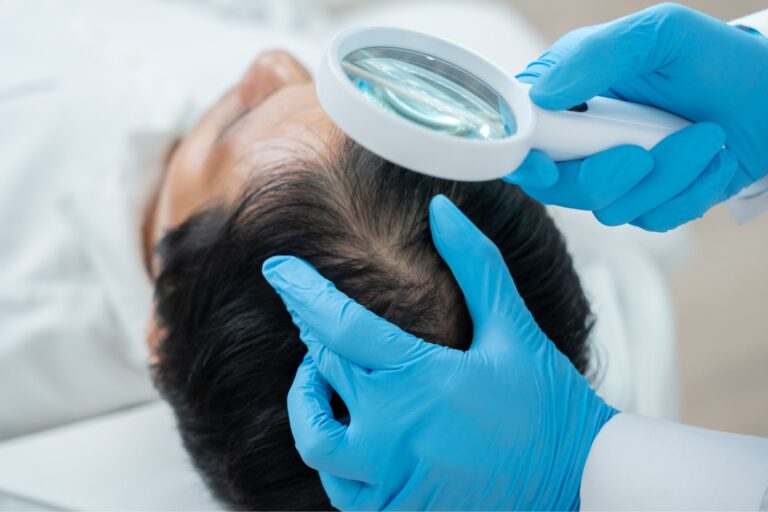
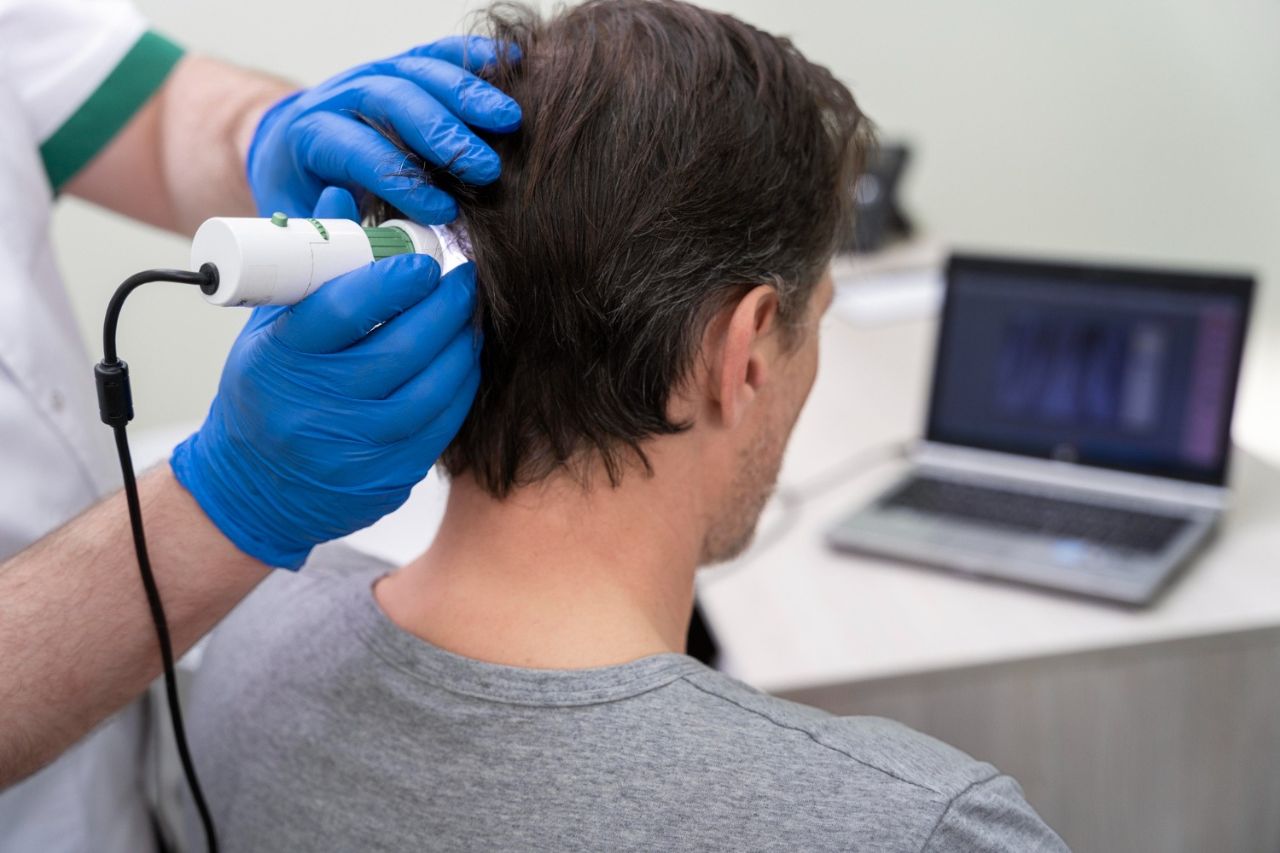
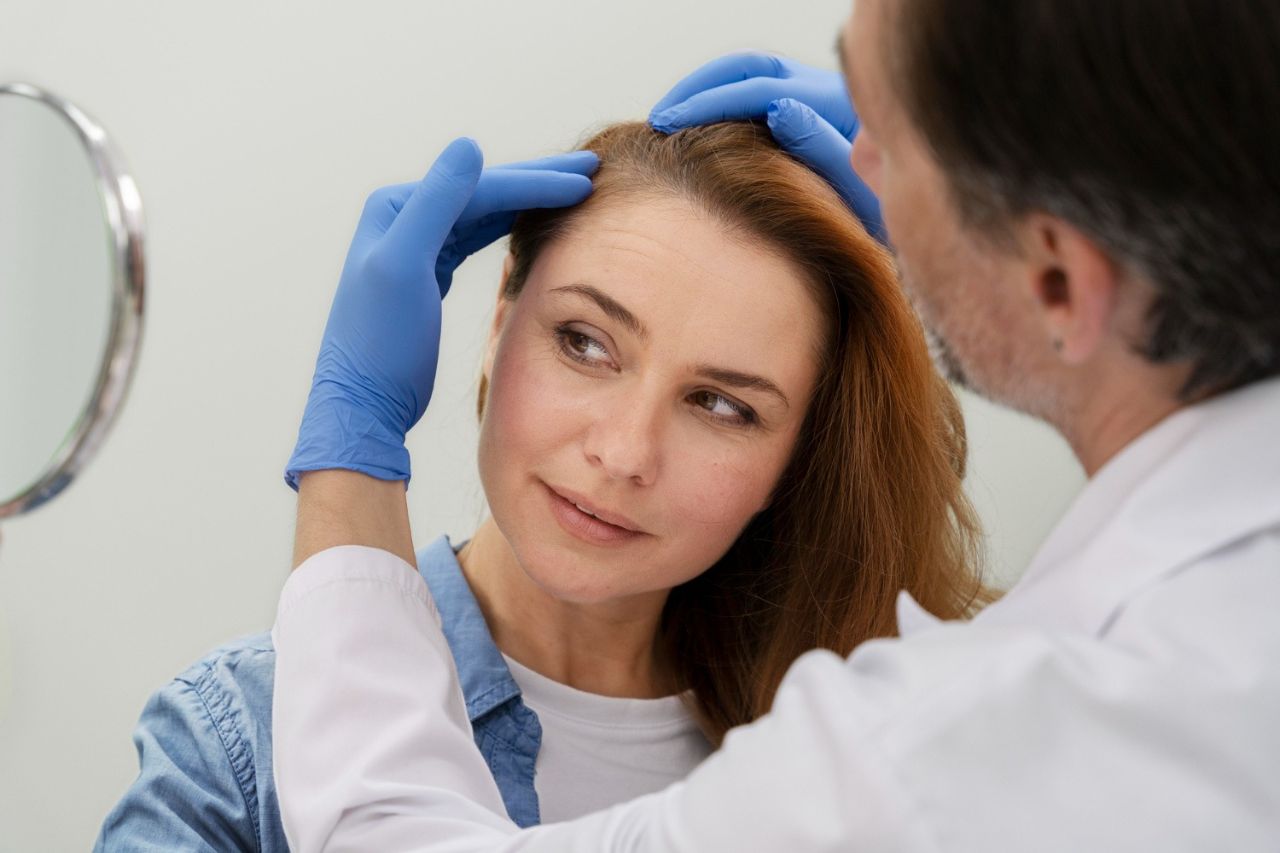
During the examination, the doctor may inspect hair distribution, the scalp surface and individual hairs. Depending on what emerges, the process can include blood testing, magnified inspection, a small sample or referral for dermatology input. None is automatic. The purpose is to select an appropriate next step, including whether an underlying health issue deserves attention.
Bring a concise timeline, details of regular medicines and supplements, and any relevant family or health information. Images taken at consistent intervals may be useful if the doctor requests them. These details assist the conversation but do not substitute for examination.
The appointment can end with a plan rather than a firm label: monitor a pattern, address a health issue, modify a hair practice, seek referral, consider camouflage or make no active change. A cause may remain uncertain at first, so the follow-up plan matters as much as an initial impression.
Where Cosmetic Decisions Fit After Assessment
A cosmetic procedure should not be used as a shortcut around finding the cause of hair loss. Research on a procedure may be relevant to a defined group of people in a particular study, but it cannot predict an outcome for an individual or confirm that the same approach is appropriate in every setting. Products and procedures can also differ in preparation, technique, eligibility and regulatory pathway.
If a scalp procedure is considered after assessment, a consultation with a doctor is needed to assess suitability. The discussion should cover what is known and unknown about the option, alternatives, the possibility of choosing no procedure, and what results may realistically vary between individuals. It should also explain the potential risks, side effects and complications relevant to the exact procedure, together with aftercare and recovery considerations. A decision does not need to be made at the first discussion.
Choices Can Include Waiting, Camouflage or Further Care
There is no need to make a cosmetic choice because a hair change has been noticed. The plan may be to collect more information, adjust a routine, use a practical covering or leave the appearance unchanged. Those choices do not prevent later medical discussion.
Where an underlying condition is identified, managing it may take priority. Where the picture is unclear, a planned review can be more useful than moving immediately to a cosmetic option. Ask what information is established, what still needs monitoring and which changes would justify an earlier return.
Be cautious with material that presents one approach as certain, permanent or universally suitable. Reliable information leaves room for uncertainty and individual differences, including the possibility that no procedure is appropriate at that time.
Considering Your Next Step
The most useful next step is usually an assessment of the hair change before making a cosmetic decision. A doctor can consider the pattern, timing, scalp findings and wider health context, then explain whether further medical care, monitoring, camouflage or discussion of options is appropriate. If you are an adult in Brisbane and would like to ask whether a consultation is suitable for your circumstances, you can contact the clinic about a consultation. There is no obligation to proceed with any procedure, and suitability must be assessed individually.