
Non Ablative Fraxel Laser: Rejuvenating Skin with 1940 nm Technology
As women reach their fifties, the skin undergoes natural physiological changes, including a reduction in collagen production, loss of elasticity, and the accumulation of lifetime sun exposure. In Australia, where the climate is particularly harsh, these changes often manifest as fine lines, uneven texture, and stubborn superficial pigmentation. For individuals seeking visible rejuvenation without the extensive downtime associated with fully ablative procedures, fractional non ablative laser technology offers an excellent balance of safety and efficacy. The non ablative Fraxel laser, particularly when utilizing the 1940 nm wavelength, is a highly effective tool for restoring a luminous, healthy glow to mature skin.
The Science of Fractional Photothermolysis
Fractional photothermolysis is a laser technology introduced to overcome the limitations of traditional resurfacing. Instead of removing the entire outer layer of the skin, a fractional laser delivers energy in narrow, vertical columns to create thousands of microscopic treatment zones.
The surrounding skin between these microscopic treatment zones remains completely untouched and healthy. This untreated skin acts as a natural reservoir of viable cells, enabling rapid healing and re epithelialisation. Because the stratum corneum (the outermost barrier of the skin) has a low water content, it remains intact immediately after treatment. This preservation of the skin barrier is what makes non ablative fractional lasers fundamentally different from ablative systems. It significantly reduces the risk of infection and allows patients to return to their daily routines much faster.
The wound healing response also differs from ablative techniques because the epidermal tissue spared between thermal zones contains viable transient amplifying cells, capable of rapid re epithelialisation. Furthermore, the gradual exfoliation of the epidermis after treatment leads to natural improvement in superficial dyspigmentation without the need for aggressive surface removal. To understand how this fits into a broader approach for reversing sun damage, read our comprehensive guide on sun damage and dyschromia.
The 1940 nm Wavelength for Pigment and Texture
Modern fractional non ablative devices often feature multiple wavelengths to target different skin depths and concerns:
| Wavelength | Target Depth | Primary Indication | Expected Results |
|---|---|---|---|
| 1927 nm / 1940 nm | Superficial (Epidermis) | Sun induced pigmentation, freckles, flat lentigines, and overall skin dullness | Rapid clearing of superficial brown spots, brighter skin tone, and refined texture |
| 1550 nm | Deep (Dermis) | Fine to moderate wrinkles, acne scars, surgical scars, and deep collagen stimulation | Improved skin firmness, reduction in wrinkle depth, and smoother skin texture |
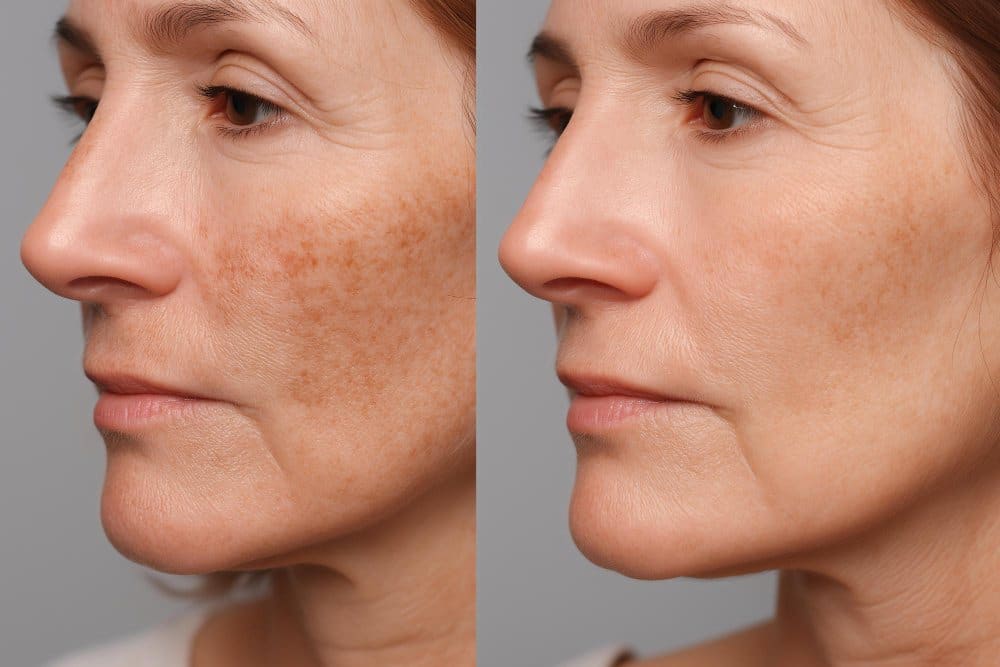
The 1940 nm wavelength has a high absorption coefficient for water, making it highly precise for treating epidermal concerns. It is particularly effective for treating solar lentigines (sun spots) and ephelides (freckles) that commonly accumulate on the face, neck, and chest of mature Australians. By targeting the water within the epidermis, the laser gently coagulates the pigmented cells, which then rise to the surface and naturally slough off over several days as microscopic epidermal necrotic debris.
The depth of penetration of each microscopic treatment zone is energy dependent and can be tailored to the characteristics of the treatment area. Increases in pulse energy lead to increases in treatment zone depth and width without compromising the structure or viability of the surrounding tissue. This allows the cosmetic physician to precisely calibrate the treatment intensity based on the individual patient’s skin thickness, concern severity, and tolerance for downtime.
What to Expect During and After Treatment
To ensure a comfortable experience, a strong topical anaesthetic cream is applied to the treatment area for approximately 45 to 60 minutes prior to the procedure. The cosmetic physician must ensure the anaesthetic is thoroughly removed and the skin is completely dry before starting, as any residual moisture can interfere with the laser energy absorption. To learn how to prepare your skin for this process, see our guide on pre treatment skin conditioning.
During the treatment, patients typically experience a warm, prickling sensation. A cooling device that blows cold air onto the skin is often used to enhance patient comfort and distract from the heat of the laser.
Immediately after the procedure, the skin will appear red and swollen, feeling similar to a moderate sunburn. Over the next three to seven days, the skin will develop a bronzed appearance as the microscopic epidermal necrotic debris rises to the surface. This debris will gently exfoliate, revealing fresher, smoother, and more evenly toned skin underneath. Proper post treatment care is essential during this time; please review our detailed instructions on laser aftercare and healing to ensure a safe recovery. A series of three to six treatments, spaced four to six weeks apart, is typically recommended to achieve optimal results.
Ideal Candidates and Precautions
The non ablative Fraxel laser is highly versatile and suitable for a wide range of skin types. However, a thorough consultation with a cosmetic physician is essential to ensure suitability and safety.
- Skin Conditioning: Pre treating the skin with active skincare, such as Vitamin C and Vitamin B3, can enhance the healing response and improve overall results.
- Contraindications: Treatments should not be performed on individuals with active skin infections, open wounds, or those who have taken isotretinoin (Roaccutane) within the last six months.
- Sun Avoidance: Strict sun protection before and after treatment is mandatory to prevent post inflammatory hyperpigmentation, particularly in the sunny Australian climate.
- Acne Prone Skin: Patients with a history of acne may experience temporary breakouts following treatment due to the disruption of follicular units during the procedure. Prophylactic low dose antibiotics can prevent this in subsequent sessions.
A retrospective evaluation of 961 successive fractional laser treatments demonstrated a very low overall complication rate of 7.6%, with the most common side effects being temporary acneiform eruptions and mild herpes simplex outbreaks. To date, permanent pigmentary alteration and scarring have not been reported with standard treatment parameters.
For the woman seeking to reverse decades of sun damage and restore a healthy, radiant complexion, the 1940 nm non ablative fractional laser provides a scientifically proven, low risk solution with manageable downtime.