In our quest for youthful, radiant skin, we are often faced with a barrage of products and treatments that promise to turn back the clock. But for those who are seeking a truly transformative and long-lasting improvement in their skin’s health and appearance, fractional light-based skin rejuvenation offers a scientifically proven solution. This advanced treatment goes beyond the surface, stimulating the skin’s natural regenerative processes to address a wide range of concerns, from fine lines and wrinkles to rough texture and enlarged pores. Understanding the science behind this innovative approach is the first step in embarking on a journey to healthier, more beautiful skin.
The Challenge of Photodamaged Skin
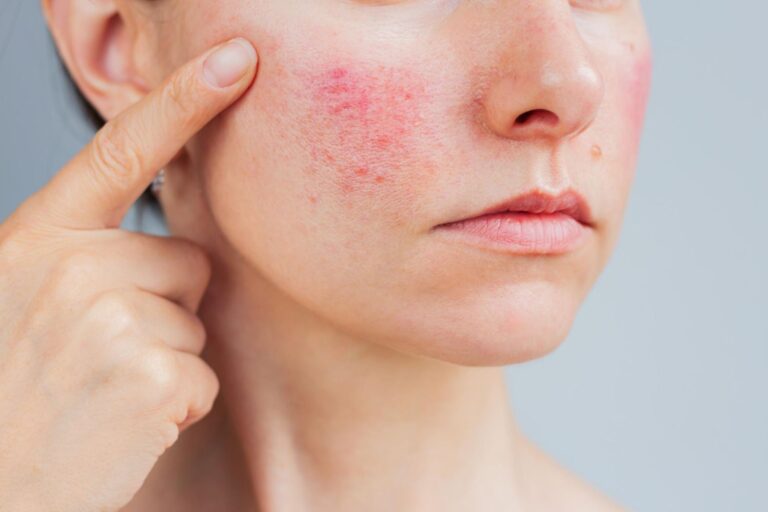
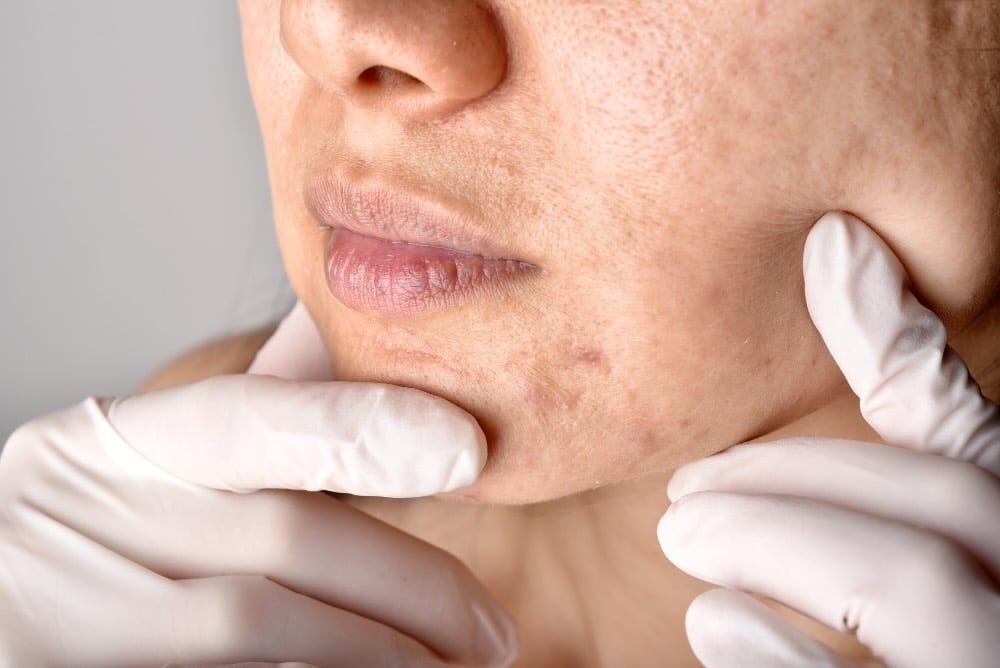
Before we delve into the science of fractional light-based treatments, it’s important to understand the problem they are designed to solve: photodamaged skin. Over time, our skin is exposed to a variety of environmental aggressors, with the sun’s ultraviolet (UV) radiation being the most significant. This chronic sun exposure leads to a breakdown of collagen and elastin, the two proteins that are responsible for the skin’s firmness and elasticity. The result is a host of visible signs of aging, including fine lines, wrinkles, rough texture, enlarged pores, and mottled pigmentation.
While a good skincare routine and diligent sun protection can help to slow down this process, they can only do so much. To truly reverse the signs of photodamage and restore the skin’s youthful vitality, we need to go deeper, to the level of the dermis, where collagen and elastin are produced.
The Power of Fractional Light: A Controlled Healing Response
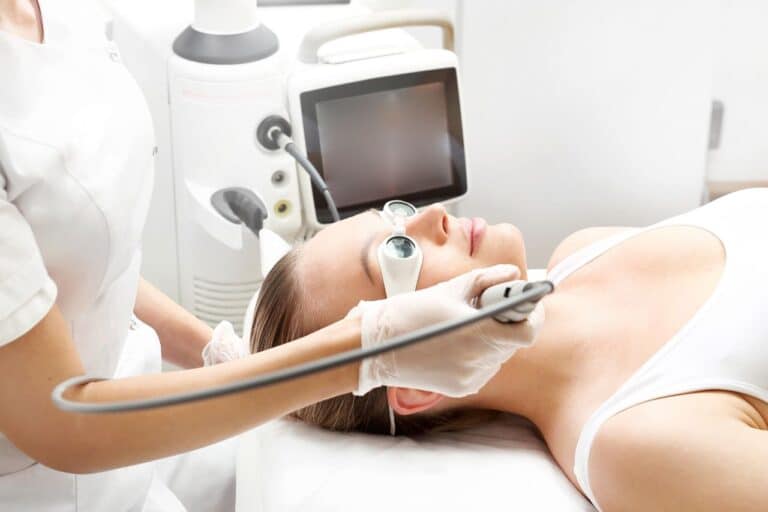
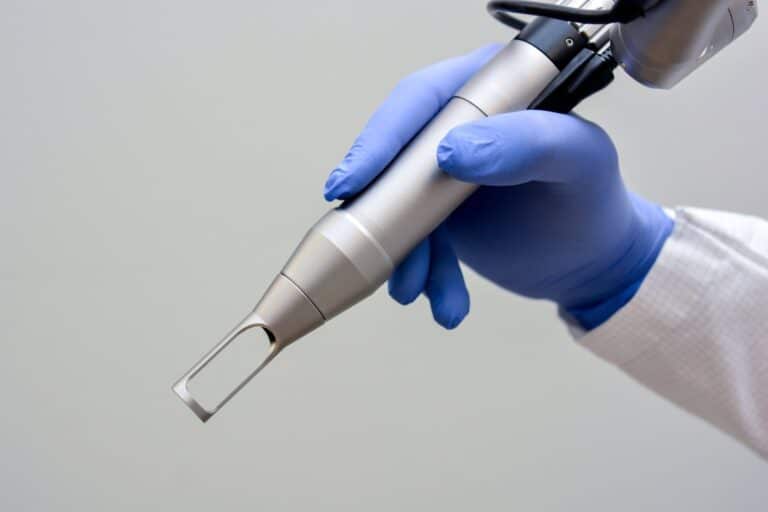
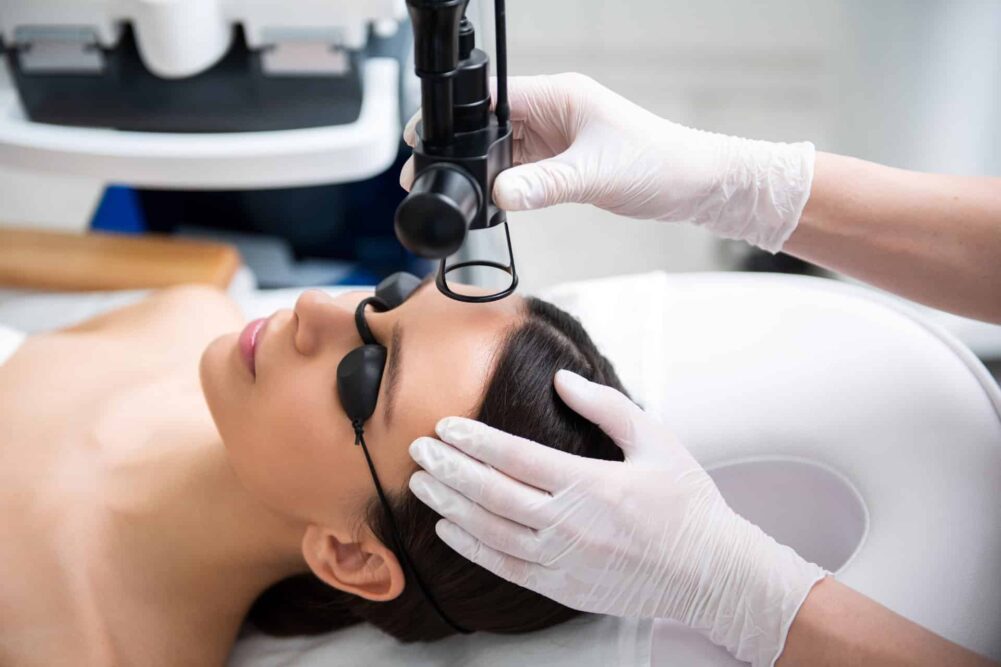
Fractional light-based skin rejuvenation is a revolutionary approach that harnesses the body’s own healing power to rejuvenate the skin from the inside out. The treatment involves using a laser or other light-based device to create a grid of microscopic treatment zones in the skin, leaving the surrounding tissue intact. This “fractional” approach is the key to the treatment’s safety and efficacy.
Each of these microscopic treatment zones is a column of thermal injury that extends deep into the dermis. This controlled injury triggers the body’s natural wound-healing response, a complex cascade of events that leads to the production of new, healthy collagen and elastin. The surrounding, untreated tissue acts as a reservoir of healthy cells that migrate into the treated zones, accelerating the healing process and minimising downtime.
The Journey of Collagen Regeneration: A Timeline of Transformation
The results of fractional light-based skin rejuvenation are not immediate; they unfold over time as the skin goes through the process of collagen regeneration. This journey of transformation can be broken down into several phases:
Phase 1: The Inflammatory Phase (Days 1-3)
Immediately after the treatment, the skin will appear red and may feel warm, similar to a sunburn. This is the inflammatory phase, a normal and necessary part of the healing process. During this phase, the body sends a rush of inflammatory cells to the treated area to clear away the damaged tissue and prepare the way for new growth.
Phase 2: The Proliferative Phase (Days 3-21)
In the days and weeks following the treatment, the skin enters the proliferative phase. During this phase, fibroblasts, the cells that produce collagen and elastin, are activated and begin to lay down a new network of these essential proteins. This is when the real magic happens, as the skin begins to rebuild itself from the inside out.
Phase 3: The Remodelling Phase (Weeks 3 to 6 Months)
The final phase of the healing process is the remodelling phase. During this phase, the newly formed collagen and elastin are reorganised and strengthened, leading to a gradual improvement in the skin’s texture, firmness, and elasticity. This is when you will begin to see the full results of the treatment, with a visible reduction in fine lines and wrinkles, a smoother texture, and a more even skin tone.
Ablative vs. Non-Ablative: Choosing the Right Approach
Fractional light-based treatments can be broadly categorised into two types: ablative and non-ablative. The choice between these two approaches will depend on your individual goals, your tolerance for downtime, and the specific concerns you are looking to address.
Ablative Fractional Resurfacing
Ablative treatments are more aggressive, removing the outer layer of the skin (the epidermis) in the treated zones. This results in a more dramatic improvement in the skin’s appearance, but it also comes with a longer downtime, typically a week or more. Ablative treatments are often recommended for individuals with more significant signs of photodamage, such as deep wrinkles or severe texture issues.
Non-Ablative Fractional Resurfacing
Non-ablative treatments are less invasive, heating the underlying tissue without removing the epidermis. This results in a more gradual improvement in the skin’s appearance, with minimal downtime. Non-ablative treatments are a good choice for individuals with mild to moderate signs of photodamage, or for those who are looking for a preventative treatment to maintain their skin’s health and vitality.
The Importance of a Series of Treatments
While a single fractional light-based treatment can produce noticeable results, a series of treatments is typically recommended to achieve the best possible outcome. Each treatment builds upon the results of the previous one, leading to a cumulative improvement in the skin’s health and appearance. A typical treatment protocol will involve a series of 3-6 treatments, spaced 3-6 weeks apart. This spaced-out approach allows the skin to fully heal and regenerate between treatments, ensuring a safe and effective outcome. It also allows the practitioner to adjust the treatment parameters as needed to address your specific concerns and achieve your desired results.
The Long-Term Benefits of Fractional Light-Based Skin Rejuvenation
The benefits of fractional light-based skin rejuvenation are not just cosmetic; they are also about improving the long-term health of your skin. By stimulating the production of new collagen and elastin, these treatments can help to strengthen the skin’s structure, improve its resilience, and slow down the aging process. The result is skin that not only looks younger, but is also healthier and more vibrant.
Your Journey to Healthier Skin
Fractional light-based skin rejuvenation is a powerful and scientifically proven approach to reversing the signs of photodamage and restoring the skin’s youthful vitality. By understanding the science behind this innovative treatment, you can make an informed decision about whether it is the right choice for you. If you are interested in embarking on a journey to healthier, more beautiful skin, I encourage you to schedule a consultation with a qualified and experienced practitioner who can guide you on your way.
Dr Tina Fang MBBS FRACGP FACAM is a cosmetic physician with 10 years of experience in aesthetic medicine, with experience in advanced laser technologies. To book a consultation and learn more about fractional light-based skin rejuvenation, contact us at 07 3472 7477 or book online. We are located at Level 2, 1808 Logan Rd, Upper Mt Gravatt, QLD 4122.