
Laser Safety and Regulatory Compliance in Australian Cosmetic Medicine
In Australia, the field of cosmetic medicine is governed by some of the strictest safety standards and regulatory frameworks in the world. These regulations are designed to protect patients from the risks associated with high energy devices, ensuring that non surgical cosmetic procedures are performed safely, ethically, and responsibly. For any patient considering a laser treatment, understanding these safety standards and the qualifications of their practitioner is essential. A reputable cosmetic physician operates in strict accordance with these guidelines, prioritising patient well being and evidence based care above all else.
The Regulatory Landscape: AHPRA and National Boards
The primary regulatory body overseeing registered health practitioners in Australia is the Australian Health Practitioner Regulation Agency, working in partnership with the National Boards. In September 2025, the National Boards released updated guidelines specifically addressing the advertising of higher risk non surgical cosmetic procedures, which include treatments involving high energy lasers, intense pulsed light, and deep chemical peels.
These guidelines establish clear expectations for how cosmetic procedures should be presented to the public. The core principle is that cosmetic advertising must be:
- Honest and Balanced: It must accurately represent both the potential benefits and the inherent risks of a treatment.
- Realistic and Informative: It must avoid creating unrealistic expectations or downplaying the recovery time and number of sessions required.
- Non Exploitative: It must protect the dignity of patients and avoid targeting vulnerable individuals.
A key requirement under these guidelines is the avoidance of overly marketing focused or hyperbolic language. Terms such as “miracle cure” or “guaranteed results” are strictly prohibited. Instead, practitioners must use neutral, evidence based, or quantifiable terms to describe treatment outcomes. Furthermore, to prevent the misrepresentation of professional status, the guidelines restrict the use of words like “specialist” or “specialising” unless the practitioner holds a recognised specialist registration in that specific field. To see how we apply this ethical approach in our daily practice, please read about our under promise and over deliver philosophy.
Who Is Responsible for Advertising Compliance?
Under the National Law, responsibility for advertising compliance rests with every person involved in the advertising of a regulated health service. This includes the registered health practitioner, the business owner, and any person who authorises or controls the advertising content.
If a registered practitioner becomes aware that their services are being advertised in a way that does not comply with these guidelines, they must demonstrate that they have taken all reasonably practicable steps to have the advertising corrected. Serious or repeated failure to meet these guidelines may have consequences for a health practitioner’s registration.
Therapeutic Goods Administration (TGA) Regulations
In addition to advertising guidelines, the use of medical devices and prescription medications in cosmetic medicine is strictly regulated by the Therapeutic Goods Administration. High energy lasers used for skin resurfacing and pigment removal are classified as medical devices and must be registered on the Australian Register of Therapeutic Goods.
Furthermore, many topical agents and oral medications used in conjunction with laser treatments, such as prescription strength hydroquinone, retinoic acid, and oral tranexamic acid, are classified as Schedule 4 (prescription only) substances. Under TGA regulations, it is illegal to advertise these prescription only substances to the public. A cosmetic physician must conduct a thorough, face to face consultation with a patient to evaluate their medical history and prescribe these treatments only when clinically appropriate.
Laser Safety Standards in the Clinic
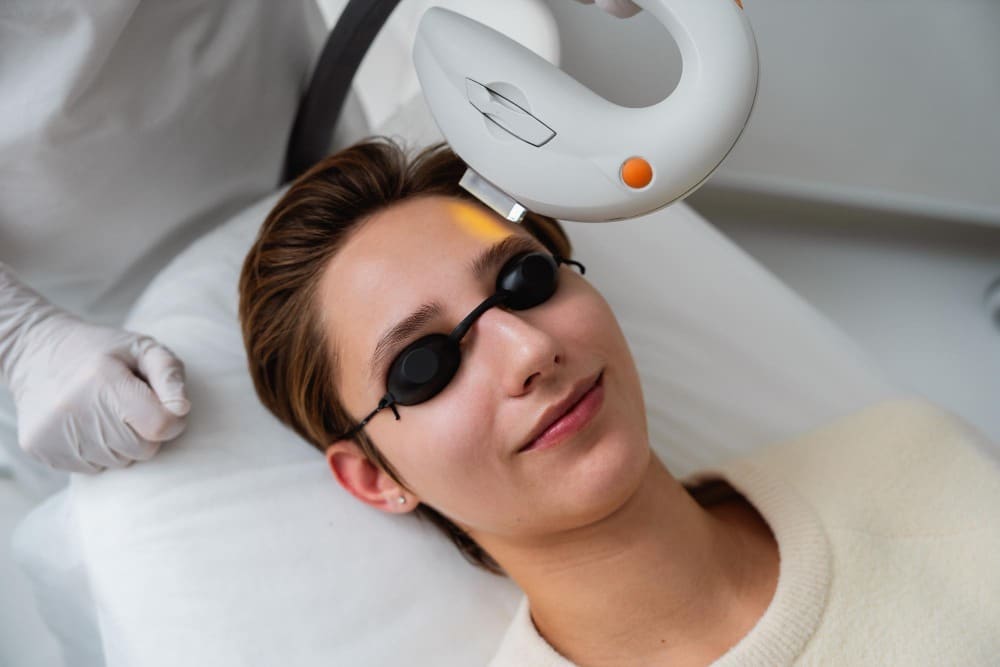
Operating a high energy laser device requires a comprehensive clinic safety system to protect both patients and staff. Australian Standards (such as AS/NZS 4173) outline strict administrative and operational controls that must be maintained in any facility utilising medical lasers:
- Controlled Laser Areas: Laser treatments must be performed in a dedicated room with appropriate warning signage on the door, preventing unauthorised entry while the laser is active.
- Eye Protection: Both the patient and the practitioner must wear wavelength specific protective eyewear during the procedure to prevent accidental eye damage. When treating near the eyes, intraocular eye shields must be used.
- Smoke Evacuation: Laser treatments that ablate tissue generate a laser plume (vapour and microscopic particles). Clinics must utilise high efficiency smoke evacuators and specialised masks (such as 0.1 micron filters) to prevent the inhalation of potentially harmful particles, as there is evidence that viral infections can be transmitted through the laser plume.
- Equipment Maintenance: Laser devices must undergo regular calibration and maintenance by certified technicians to ensure they deliver energy precisely and safely.
- Staff Training: All personnel involved in laser procedures must be appropriately trained and credentialed, with documented evidence of their competency.
These clinical measures are designed to protect you during the procedure, and they are matched by the detailed post treatment recovery instructions that we provide to ensure a safe and successful healing phase at home.
The Importance of Choosing a Qualified Cosmetic Physician
Because lasers are powerful medical devices capable of causing serious, irreversible complications, such as burns, permanent scarring, and pigment loss, they should only be operated by, or under the direct supervision of, highly trained medical professionals.
A qualified cosmetic physician possesses a deep understanding of skin anatomy, laser physics, and wound healing. During the initial consultation, they will perform a comprehensive skin assessment, identify any contraindications (such as active infections or a history of keloid scarring), and design a customised treatment plan tailored to the patient’s specific skin type and aesthetic goals.
By choosing a practitioner who strictly adheres to Australian safety standards and regulatory guidelines, patients can undertake their rejuvenation journey with complete confidence, knowing their safety and health are in expert hands.