For decades, the approach to facial aging has been focused on individual problem areas. A wrinkle here, a line there treat each one in isolation. But modern aesthetic medicine has evolved to embrace a more sophisticated and holistic approach: pan-facial rejuvenation. This philosophy recognises that the face is an integrated system, and that true rejuvenation comes from understanding and treating the face as a whole, rather than as a collection of separate problems.
The Limitations of Single-Area Treatment
When we look at our faces, we often focus on the most obvious signs of aging. Maybe it’s the lines around the eyes, or the deepening of the nasolabial folds (the lines from the nose to the mouth). Our instinct is to target these areas directly, to smooth out the lines or fill in the folds.
While treating individual areas can certainly provide some improvement, this approach has significant limitations. First, it often fails to address the root cause of the visible changes. For example, deep nasolabial folds are often not just about lines, they’re frequently the result of volume loss in the cheeks and mid-face. Treating only the fold itself, without addressing the underlying volume loss, can result in an unnatural appearance.
Second, single-area treatment can create imbalance in the face. The face is a work of art, with proportions and relationships between different features that contribute to overall harmony and beauty. When you treat one area in isolation, you can inadvertently create or exacerbate imbalances elsewhere.
The Philosophy of Pan-Facial Rejuvenation
Pan-facial rejuvenation takes a different approach. Rather than focusing on individual lines or folds, it starts with a comprehensive assessment of the entire face. A qualified practitioner will evaluate the overall structure of the face, the relationships between different features, and the specific changes that have occurred with aging.
The goal of pan-facial rejuvenation is not to erase all signs of aging or to create a dramatically different face. Rather, it’s to restore balance, harmony, and a refreshed appearance while maintaining the individual character and natural beauty of the face. It’s about working with the face’s natural architecture, not against it.
Understanding Facial Anatomy and Relationships
To understand pan-facial rejuvenation, it helps to think about the face in terms of different anatomical regions and how they relate to each other. The face can be divided into the upper third (forehead and brows), the middle third (cheeks and mid-face), and the lower third (jawline and chin).
These regions don’t exist in isolation, they’re interconnected through a complex system of muscles, fat pads, and ligaments. Changes in one region can have cascading effects on the others. For example, as we age, the brows naturally descend due to loss of elasticity and volume loss in the temples. This descent of the brows can make the upper eyelids appear more hooded and the eyes appear more tired. It can also contribute to a flattening of the mid-face.
Similarly, volume loss in the cheeks and mid-face can contribute to the appearance of jowling along the jawline, because without the support of the cheek volume, the skin and soft tissues of the lower face sag downward.
The Interconnected Nature of Facial Aging
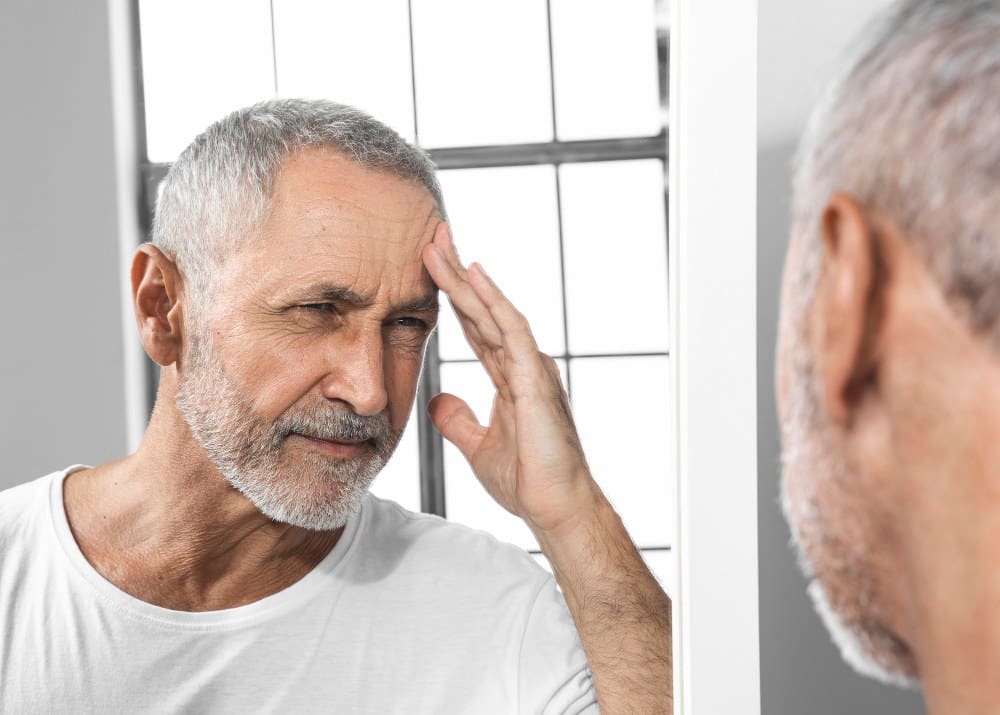
One of the key insights of pan-facial rejuvenation is understanding how changes in one area of the face can influence the appearance of other areas. This interconnectedness opens up opportunities for treatment that might not be immediately obvious.
Consider the temples. The temples are one of the earliest areas to show signs of aging, with volume loss creating a hollow appearance. Many people don’t realise that hollow temples can have a significant impact on the overall appearance of the face. The temples provide support for the lateral brow and the mid-face. When the temples are hollow, the brow appears to “fall over a cliff,” and the lateral cheek appears to sag.
By restoring volume to the temples, a skilled practitioner can not only improve the appearance of the temples themselves, but also lift the lateral brow and provide support to the mid-face. This can result in a more refreshed appearance throughout the upper and middle thirds of the face, without directly treating those areas.
Similarly, restoring volume to the cheeks can have a lifting effect on the lower face, improving the appearance of the nasolabial folds and reducing the appearance of jowling, even though these areas are not being directly treated.
The Role of Facial Harmony and Balance
A key principle of pan-facial rejuvenation is the concept of facial harmony. This refers to the proportions and relationships between different facial features that contribute to an overall sense of beauty and balance.
Different faces have different proportions, and there’s no single “ideal” face. However, there are certain principles of proportion and balance that tend to be aesthetically pleasing. For example, the face is often divided into three equal horizontal thirds, and the width of the face is typically about 1.5 times the height. The cheekbones are typically the widest part of the face.
A qualified practitioner understands these principles and uses them as a guide when planning a pan-facial rejuvenation. The goal is not to force every face into a single mold, but rather to enhance the natural proportions and balance of each individual face.
The Assessment Process
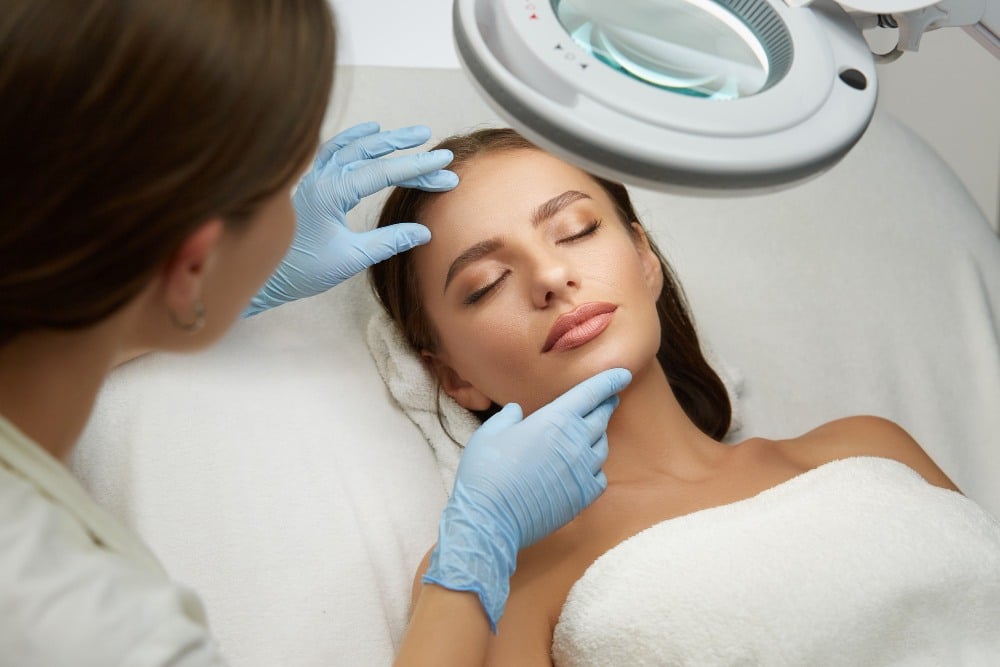
The first step in pan-facial rejuvenation is a comprehensive assessment. This goes far beyond simply looking at the face, it involves a detailed analysis of facial anatomy, the specific changes that have occurred with aging, and the individual’s goals and concerns.
A qualified practitioner will evaluate the position and shape of the brows, the volume and position of the cheeks, the definition of the jawline, the position of the chin, and many other factors. They’ll also consider how these different features relate to each other and how changes in one area might influence the appearance of others.
This assessment process is crucial because it allows the practitioner to identify the root causes of the visible signs of aging, rather than just treating the symptoms. It also allows for the development of a comprehensive treatment plan that addresses multiple areas in a coordinated way.
Creating a Personalised Treatment Plan
Once the assessment is complete, a qualified practitioner will work with you to develop a personalised treatment plan. This plan will outline the specific areas to be treated, the approach that will be used for each area, and the expected timeline for results.
A pan-facial rejuvenation plan might include treatment of the temples to restore volume and lift the brows, treatment of the cheeks to restore volume and support the mid-face, treatment of the nasolabial folds to soften their appearance, and treatment of the jawline to restore definition. The specific plan will depend on your individual facial anatomy and your goals.
Importantly, a pan-facial rejuvenation plan is not necessarily something that happens all at once. Many practitioners recommend a staged approach, treating different areas over time to allow for assessment and adjustment. This also allows you to gradually adjust to the changes and ensure that the results look natural and harmonious.
The Results of Pan-Facial Rejuvenation
When done well, pan-facial rejuvenation results in a face that looks refreshed, balanced, and naturally beautiful. The changes are often subtle, people may comment that you look well-rested or that you’re glowing, without being able to pinpoint exactly what’s different.
The key to achieving these results is choosing a qualified practitioner who understands facial anatomy, has a keen eye for proportion and balance, and takes the time to develop a comprehensive treatment plan tailored to your individual face.
Conclusion
Pan-facial rejuvenation represents a shift in how we think about facial aging and aesthetic treatment. Rather than chasing individual lines and wrinkles, it’s about understanding the face as an integrated system and working to restore balance, harmony, and a refreshed appearance. If you’re interested in exploring this approach, I encourage you to schedule a consultation with a qualified aesthetic medicine practitioner who can assess your individual face and discuss how pan-facial rejuvenation might be right for you.
Dr Tina Fang MBBS FRACGP FACAM is a cosmetic physician with 10 years of experience in aesthetic medicine, with experience in comprehensive facial rejuvenation. To book a consultation and learn more about pan-facial rejuvenation, contact us at 07 3472 7477 or book online. We are located at Level 2, 1808 Logan Rd, Upper Mt Gravatt, QLD 4122.