
In aesthetic medicine, there’s a concept gaining increasing recognition: the idea that the body has an inherent ability to rejuvenate itself. This is the foundation of collagen biostimulation — an approach to skin rejuvenation that supports the body’s natural repair processes. Understanding how biostimulation works can help you make informed decisions about your skin health and explore options that align with your goals.
What Is Collagen and Why Does It Matter?
Before we dive into biostimulation, it helps to understand collagen itself. Collagen is the most abundant protein in the human body and plays a major role in skin structure. It makes up around 70% of the dermis — the middle layer of skin responsible for firmness and support.
Think of collagen as the scaffolding of your skin. It forms a supportive framework that keeps skin firm, smooth, and resilient. When collagen is plentiful and well organised, skin typically looks more youthful and elastic. With age, collagen production slows and existing collagen becomes more fragmented and disorganised, which contributes to thinning skin, fine lines, and loss of firmness.
There are multiple types of collagen in the skin, with Type I and Type III being the most common. Type I collagen provides strength and structure, while Type III contributes to flexibility and elasticity. As we age, we tend to produce less collagen overall, and the balance between these collagen types can shift — contributing further to reduced firmness and elasticity.
The Concept of Biostimulation
Biostimulation refers to treatments designed to stimulate the body’s own biological processes to produce new collagen. Rather than adding volume directly, biostimulatory treatments work by triggering a controlled healing response — encouraging fibroblasts (the cells responsible for producing collagen) to increase collagen production.
This differs from traditional dermal fillers, which primarily work by adding volume immediately. Both approaches can be useful, but biostimulation offers a distinct benefit: results tend to develop gradually and look natural because they rely on your body’s own collagen-building processes.
The Science Behind Neocollagenesis
When a biostimulatory substance is introduced into the skin, it initiates a carefully coordinated biological response. The process begins with a controlled inflammatory response — not the type of inflammation that causes significant pain or lasting redness, but a beneficial response that signals the body to begin repair.
This response activates fibroblasts in the dermis. Fibroblasts then increase the production of new collagen — a process known as neocollagenesis. This is similar to how the body repairs a minor injury, except the stimulus is carefully controlled and targeted to encourage collagen renewal.
As new collagen forms, it gradually integrates into the existing collagen network, strengthening and reorganising the skin’s support structure. This takes time, which is why results from biostimulatory treatments are typically gradual and become more noticeable over several months.
The Timeline of Collagen Remodelling
Understanding the timeline helps set realistic expectations. Collagen remodelling generally unfolds in stages:
Phase 1: Initial Response (Days 1–2)
Some redness, swelling, or mild discomfort may occur as the body’s early healing response begins. This is typically temporary.
Phase 2: Collagen Production (Weeks 1–4)
Fibroblasts are actively producing new collagen. Visible changes may still be subtle, but important work is happening beneath the surface.
Phase 3: Collagen Remodelling (Months 1–3)
New collagen begins to integrate and reorganise within the skin. Many people start noticing improvements in texture, firmness, and overall skin quality during this period.
Phase 4: Continued Improvement (Months 3–6)
Remodelling and collagen maturation continue, with results often becoming more defined and refined.
Phase 5: Stabilisation (Months 6+)
The new collagen has matured and stabilised within the skin structure. This is one reason biostimulatory treatments can be longer-lasting than treatments that only provide temporary support.
What to Expect During and After Treatment
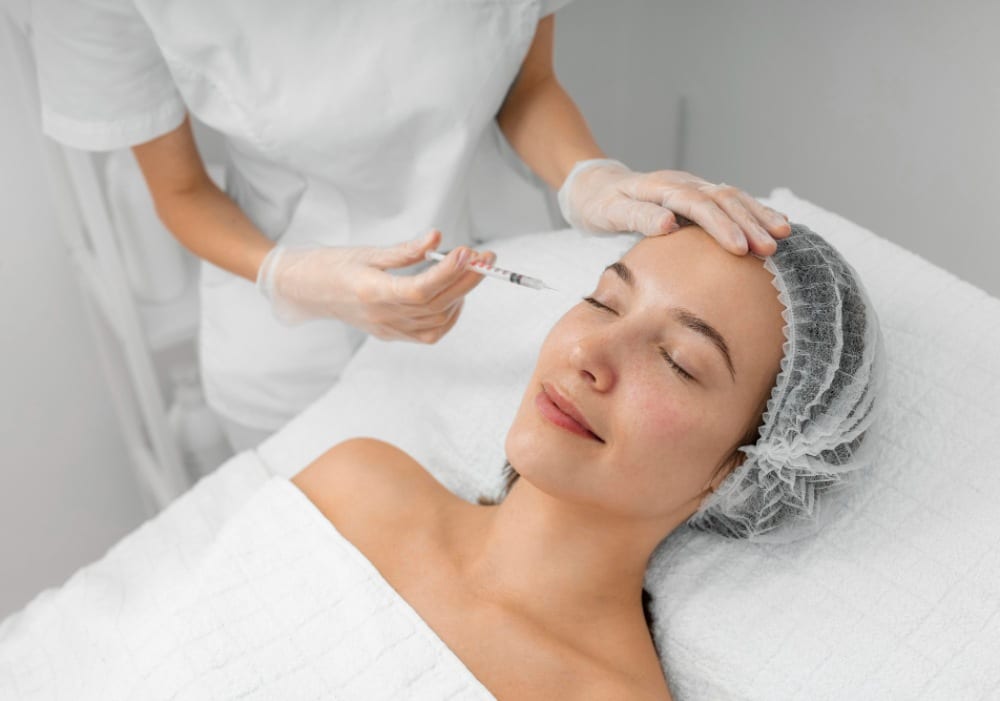
During a biostimulatory treatment, small injections are placed into targeted areas of the skin. A qualified practitioner will assess your facial anatomy and create a plan tailored to your needs and goals.
The injections can feel mildly uncomfortable, but topical anaesthetic and other comfort measures can help. Most people describe a light pressure or brief pinching sensation.
After treatment, it’s common to experience temporary redness, swelling, or mild bruising at injection sites. These effects usually settle within a few days to a week. Post-treatment instructions may include avoiding strenuous exercise, extreme temperatures, and certain skincare products for a short period.
Over the weeks and months that follow, you may notice gradual improvements in skin texture, firmness, and overall freshness. Because the changes come from your own collagen production, results often look and feel natural.
The Longevity of Results
One advantage of biostimulatory treatments is that results can be longer-lasting than traditional fillers. By encouraging the body to produce collagen that becomes part of the skin’s supportive structure, improvements may persist for an extended period.
However, biostimulation doesn’t stop the ageing process. Skin continues to age naturally, which is why some people choose